Reviews Should Be Read From A Peak-Hour View
A review that says “it melts cheese well” is useful, but B2B buyers need to look deeper. A food truck does not operate like a home kitchen. Staff may need to prepare bread, cheese, fillings, packaging, sides, and payments in a very small space. The melter must fit into that rhythm.
Good feedback should show whether the machine can handle repeated use without slowing the line. Does the heat stay steady after several orders? Can staff adjust the temperature quickly? Does the surface clean fast enough between batches? Does the unit fit on a crowded counter without blocking other work?
These details are what make the melter machine gourmet grilled cheese food truck reviews meaningful for commercial buyers.
Heat Stability Protects Service Speed
During peak hours, a cheese melter must do more than reach a high temperature. It needs controlled heat. If the temperature rises too aggressively, bread may dry or burn before the cheese melts properly. If the heat recovery is slow, the next order takes longer and the queue starts to build.
Our cheese melter is designed with adjustable temperature control from 100°C to 250°C. For food truck and compact foodservice use, this helps operators adjust heat according to cheese type, bread thickness, and service style.
A stable heat range is especially important for grilled cheese menus because small delays repeat quickly. One slow order is not serious. Twenty slow orders during lunch service can affect revenue, reviews, and customer flow.
Overheating Can Hurt More Than Output
Overheating is not only a technical issue. It creates service pressure. Staff may pause the machine, move ingredients away, clean burnt residue, or explain delays to customers. In a food truck, there is usually no backup station waiting behind it.
For equipment distributors, this matters because end users judge the machine by business performance. If a buyer loses sales during an event, they will not see it as a small inconvenience. They will see it as a supply decision that did not match their working conditions.
Before ordering for food truck customers, buyers should check the expected menu volume, heating time, counter space, voltage requirement, and cleaning method. These points are more useful than simply comparing appearance or unit price.
Compact Design Must Support Real Workflow
A food truck counter is limited. A machine can fail commercially even if it works technically, simply because it takes up too much space or slows staff movement.
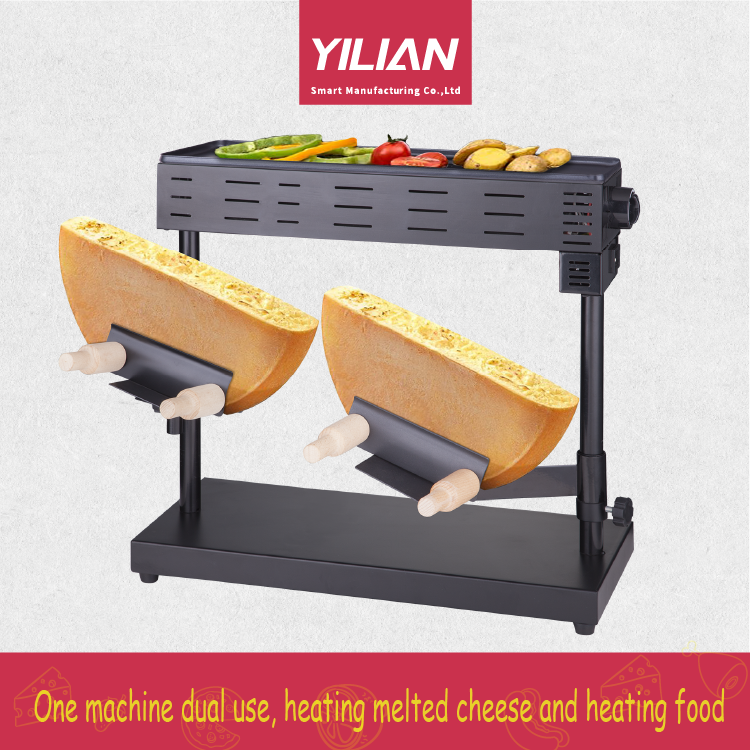
Our raclette cheese melter uses a compact tabletop structure, making it easier to place near sandwich preparation areas, café counters, small catering stations, or mobile-style foodservice setups. The 600W power and 220–240V/230V voltage direction also make electrical matching something buyers should confirm early before bulk purchase.
The non-stick cooking surface can also help staff handle melted cheese and bread residue more efficiently when used correctly. This matters because cleaning during service is different from cleaning after closing. If residue builds up too quickly, the line slows down even when the heating system works.
What B2B Buyers Should Check Before Bulk Orders
Before buying for food trucks, cafés, cheese shops, or catering equipment channels, buyers should review the operating scene first:
- Peak-hour order volume
- Countertop space
- Plug and voltage standard
- Temperature control range
- Cleaning speed
- Staff operation process
- Packing for distributor supply
- Replacement and maintenance expectations
For buyers reading the melter machine gourmet grilled cheese food truck reviews, the goal is not to find a perfect machine for every menu. The goal is to find whether the machine fits the buyer’s actual service pressure.
Conclusion
A cheese melter used in a grilled cheese food truck must be judged by peak-hour reliability. Stable heat, compact placement, simple cleaning, and correct electrical matching all affect whether the machine helps service move faster or becomes a bottleneck.
If your customers are building grilled cheese menus for food trucks, cafés, event catering, or compact food counters, the first step is to map the rush-hour workflow. How many sandwiches need to be served? Where will the melter sit? How fast must the surface be cleaned? Which plug version does the market require?
Once those details are clear, we can help review whether our cheese melter fits that working rhythm before you place a bulk order.